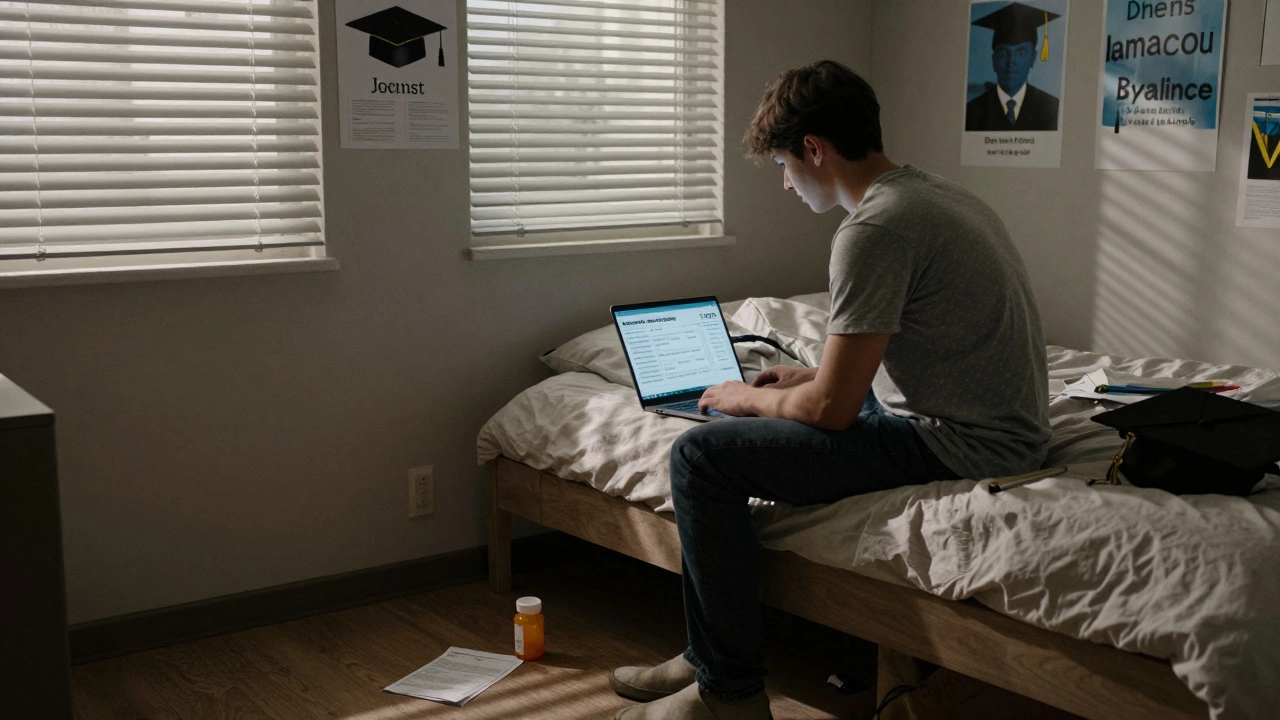
Every year, tens of thousands of graduates in the U.S. walk away from college with no job, no safety net, and over $37,000 in student loans. For many, the dream of a better life turns into a daily grind of paycheck-to-paycheck survival. Some turn to sex work - not because they want to, but because they have no other way to pay rent, buy medicine, or keep their lights on. This isn’t a pipeline. It’s a breakdown.
There are stories online about women from the Philippines moving to Dubai for work, sometimes ending up in roles they never signed up for. One woman wrote on a forum that she took a job as a filipina escort dubai after her student loan payments doubled following a rate hike. She didn’t mention glamour. She mentioned hunger. She mentioned calling her parents every Sunday to say she was fine, even when she wasn’t. These aren’t career choices. They’re survival tactics in a system that left them no other options.
Student Debt Isn’t Just a Number - It’s a Daily Stressor
The average U.S. student loan balance for the class of 2024 was $37,870. That’s not a typo. That’s more than the median annual income in 18 states. And with interest rates climbing above 7%, monthly payments for many now exceed $400. For someone working a minimum wage job - $15 an hour, 40 hours a week - that’s nearly half their take-home pay before taxes, rent, or groceries.
People don’t choose this life because they’re attracted to it. They choose it because their bank account hits zero on the 12th of every month, and the landlord doesn’t accept IOUs. A 2023 study from the University of Chicago found that 1 in 5 young adults with student debt reported turning to informal work - including sex work - to cover basic needs. The study didn’t call it a career path. It called it "economic desperation."
Why "Pipeline" Is a Dangerous Word
The phrase "student loan to sex worker pipeline" sounds like a system with clear entry and exit points. Like a factory line. But real life doesn’t work that way. There’s no enrollment form. No orientation. No HR department handing out uniforms. People don’t graduate and then click a button that says "Apply for Sex Work."
What happens instead is this: someone misses a payment. Their credit score drops. They can’t get a car loan to commute to a better job. They lose their apartment. They move in with a friend who knows someone who knows someone. That someone offers cash upfront - $500 for one night. It’s not a career move. It’s a stopgap. A Band-Aid on a broken leg.
And once someone enters that world, the stigma makes it harder to leave. Employers ask about gaps in their resume. Background checks turn up old listings. Banks deny them loans. The system doesn’t just fail them - it locks them out.
Global Patterns, Local Realities
It’s easy to point to places like Dubai and assume these are exotic stories from faraway lands. But the same pressures exist here. In Boston, a 24-year-old nursing graduate told me she started doing private sessions after her loan servicer refused to defer payments during her internship. She didn’t advertise. She didn’t use apps. She used a friend’s phone number and a single Instagram account with no photos. She said she felt invisible - until the day her client recognized her from campus.
Meanwhile, in Manila, young women with degrees in education or nursing are being recruited by agencies that promise "high-paying hospitality jobs" in the Gulf. Some end up in hotels under fake contracts. Others are told they’ll be nannies or receptionists - then pressured into sex work. The line between trafficking and economic coercion is blurry when you’re $40,000 in debt and your family is counting on you.
One woman from Cebu posted a video last year saying, "I didn’t come here for pleasure. I came here because my brother needed surgery. I didn’t know the job was listed as dubai escort reviews until I was already on the plane." She didn’t say she regretted it. She said she had no choice.

What About the Men? The Non-Binary? The Others?
The story is often told as a female one. But men, non-binary people, and trans individuals face the same pressures - and even fewer safety nets. A 2024 survey by the National Sex Workers Alliance found that 17% of male respondents with student debt had turned to sex work in the past year. Many were turned away from shelters, denied unemployment benefits, or afraid to report abuse because they didn’t fit the "victim" mold.
One man in Atlanta, who studied engineering, started doing online cam work after his disability payments were cut. He didn’t want to be seen. He used a pseudonym. He wore a hoodie. He said the only thing keeping him from suicide was the fact that he could pay his loan servicer every month - even if it meant working 12 hours a day in his bedroom.
It’s Not About Morality - It’s About Power
People talk about sex work like it’s a moral failing. But the real failure is in the system that leaves people with no alternatives. When you have a $50,000 degree and no job, and your only options are food stamps or selling your body - that’s not a choice. That’s a trap.
And the companies that profit from this? They don’t care if you’re a nurse, a teacher, or a grad student. They care if you’re desperate. That’s why agencies in Dubai advertise for "arab escort in dubai" with images of luxury cars and designer clothes. They’re selling fantasy - and preying on reality.

What Can Be Done?
There are solutions. They’re not easy. But they’re possible.
- Debt cancellation - Even partial relief would help millions. A $10,000 cancellation could reduce sex work participation by 22%, according to a 2024 study in the Journal of Economic Inequality.
- Universal basic income pilots - Cities like Stockton, CA, showed that giving people $500 a month reduced stress, improved mental health, and increased job applications.
- Decriminalization - When sex work is illegal, people can’t report abuse, get medical care, or access housing. Legalization doesn’t mean promotion - it means protection.
- Loan forgiveness for public service - Expand programs that forgive debt for teachers, nurses, and social workers. They’re the ones who can’t afford to quit.
None of these fix everything. But they start to untangle the web. Right now, the system says: "Work harder." But when you’re already working three jobs, and your debt grows faster than your paycheck - harder doesn’t help. You need a different system.
Final Thought: They’re Not Victims. They’re Survivors.
Every person who turns to sex work under financial pressure is not a statistic. They’re someone’s child. Someone’s sibling. Someone who believed in the promise of education - and got a bill instead.
Stop calling it a pipeline. Call it what it is: a symptom of a broken economy. And if you want to help, don’t look for the "worst" cases. Look for the ones who are still trying. Listen to them. Support policy changes. Demand better. Because no one should have to sell their body to pay for a degree that was supposed to set them free.
Author